Main Street and Done: The Quiet Case for a One-Street B&B Weekend

Photo by Photo by adam roye on Unsplash on Unsplash
There is a certain kind of town where the navigation app seems almost embarrassed by its own directions. You exit the highway, make one turn, and then you are there. Main Street runs from a blinking light to a grain elevator, with a coffee shop, a hardware store, a bookstore, and maybe one restaurant strung along the sidewalk. For a weekend traveler, that is not a shortage of things to do. It is the whole amenity.
Why One Street Changes the Pace
A bigger town asks you to make choices. Which neighborhood for dinner? Which parking garage? Which museum first? Even a relaxed weekend can start to feel like a logistics project. A one-street town removes most of that decision-making in one stroke. You park at the inn, walk to coffee, browse for twenty minutes, wander back, and then start thinking about lunch.
The street becomes a loop instead of a list. You do not need to plot a route or compare reviews across three districts. You learn the block quickly: who opens early, where the good bench is, which shop has the friendly dog by the door. By Saturday afternoon, you are not a visitor following a map. You are just a person on a street.
That is a different kind of weekend. It is less about coverage and more about rhythm. A single street encourages the lost art of returning to the same place twice—once for coffee, once for a sandwich, once just to sit outside because the light is nice.
The Inn Becomes the Anchor, Not the Afterthought
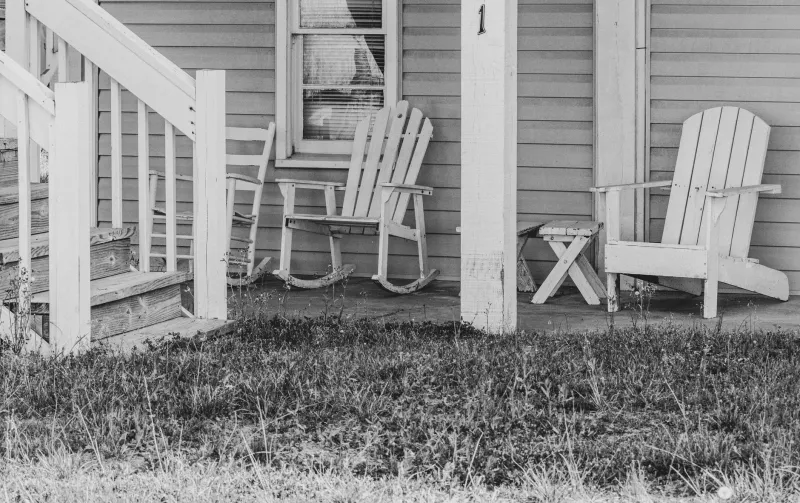
In a city, a bed-and-breakfast is often a place to sleep between activities. In a one-street town, the inn is part of the destination. You actually use the porch. You sit in the common room before dinner. You ask the innkeeper where the locals eat and get an answer that takes thirty seconds because there are only two options.
That changes the whole feel of a B&B stay. The inn is not a launchpad for a packed itinerary. It is the anchor of a small, walkable world. You might come back mid-afternoon, put your feet up, read a chapter, and then walk back out for dinner. The room is not wasted on you. The porch is not decorative. The whole property earns its keep because the weekend is designed to stay close.
A good innkeeper in a one-street town also functions as a human concierge for a very small map. They know which restaurant is closed on Tuesdays, which shop opens late on Sundays, and which side street has the best old houses to walk past. That kind of local knowledge is useful everywhere, but in a one-street town it is almost the entire guidebook.
What One-Street Charm Actually Means
It does not necessarily mean a town with exactly one road. It means a compact, walkable commercial strip where the essentials are clustered together and the rest of the town is quiet residential blocks. The street should feel lived-in rather than staged. A coffee shop with regulars, a market with a hand-lettered sign, a restaurant that takes reservations because it has only twelve tables—these are good signs.
What you are looking for is a place where the commercial strip is continuous enough to stroll and small enough to learn. If the shops are spread across four miles of highway shoulder, that is not a one-street weekend. That is a driving weekend with a walk in the middle.
How to Vet a One-Street Town Before You Book
Before you reserve a room, do a little quiet research. It takes about fifteen minutes and saves a lot of disappointment.
- Open the map in satellite view. Look for a continuous block of storefronts with sidewalks. A single row of buildings along a walkable street is ideal. A strip mall beside a four-lane road is not.
- Count the essentials. Coffee, lunch, dinner, and a small market or grocery are the baseline. A bookstore, hardware store, or library is a bonus. You do not need a full downtown, but you do need a reason to leave the inn on foot.
- Check the hours. Small towns close early and often take a day off midweek. Confirm that the coffee shop and restaurant are open on the days you are visiting. A beautiful street with everything shuttered is just a pretty place to drive through.
- Measure the walk from inn to Main Street. Under fifteen minutes is comfortable. Under five is ideal. Ask the innkeeper whether the route has sidewalks and streetlights.
- Read recent reviews with an eye for words like walkable, quiet, and everything we needed. Ignore reviews that complain there was nothing to do if that is exactly what you are looking for.
- Look for a small event. A Saturday farmers market, a library book sale, or a town festival can add a little texture without turning the weekend into a schedule. It is a bonus, not a requirement.
- Ask about dinner. In a town with one restaurant, dinner is a plan. The inn may hold tables for guests or know the backup option ten minutes away. Confirm before you arrive.
The Case Against the Itinerary
Most weekend advice tells you to maximize. See the falls, hit the trail, tour the brewery, catch the show, try the famous bakery. There is nothing wrong with that in the right place. But a one-street weekend works because it refuses to maximize. The plan is coffee, a walk, a browse, maybe a nap, dinner, and a slow morning. One reservation is enough. Two is ambitious.
This is not laziness. It is a deliberate choice to let the town set the pace. A small street has its own tempo, and it is usually slower than yours. If you try to cram a full itinerary into it, you will spend more time in the car than on the sidewalk.
What to Do When There Is Nothing to Do
This is the question that trips up first-time visitors. The answer is to treat the absence of activities as the activity. Sit on the inn porch. Read the local paper. Walk the residential blocks and look at the old houses. Get an ice cream and eat it on a bench. Talk to the innkeeper about how long they have lived there. Browse the bookstore twice.
A one-street town rewards people who are willing to be a little bored. Boredom is underrated on a weekend. It is often just the first stage of relaxing.
A Word on Expectations
Do not book a one-street town if you want nightlife, variety, or a long list of attractions. Do book it if you want calm, low decision load, and an inn that feels like the center of things rather than a place to crash. The right town will not feel empty. It will feel contained.
At Rosy Inn, we like a weekend that fits on one block. Not because there is nothing else out there, but because sometimes the best escape is the one you can walk to. Book the room, learn the street, and let the town be small. The weekend will take care of itself.